Copper Ceiling Pattern Design, The District, Docklands
NH Architecture · 2017
Role: Graphic Design
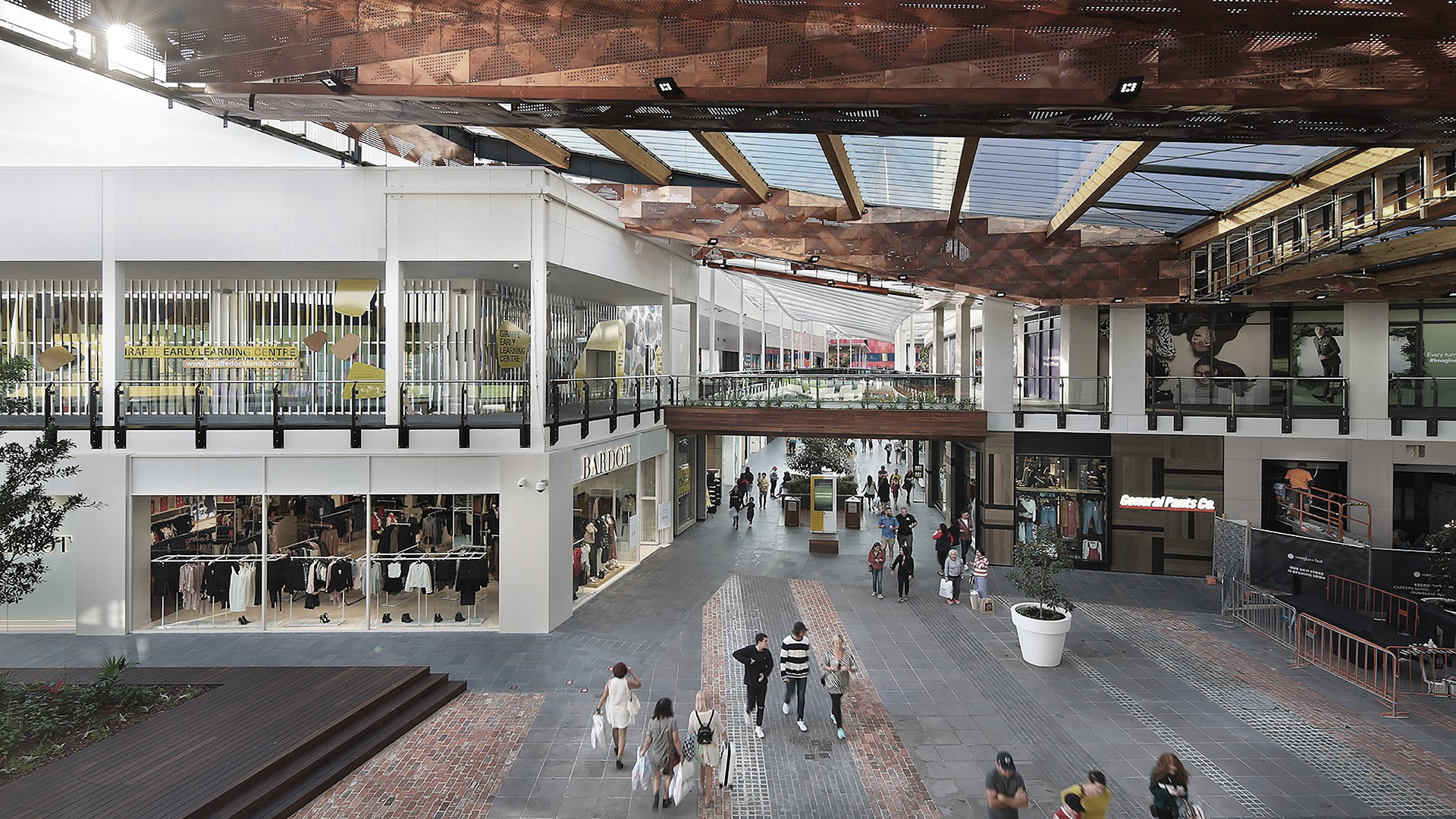
As part of the redevelopment of The District Docklands, NH Architecture sought a distinctive ceiling feature for one of the precinct’s laneways. I was engaged to design a perforated pattern that would be applied across an expansive copper ceiling, creating a striking architectural detail within the retail and entertainment precinct.
The Challenge
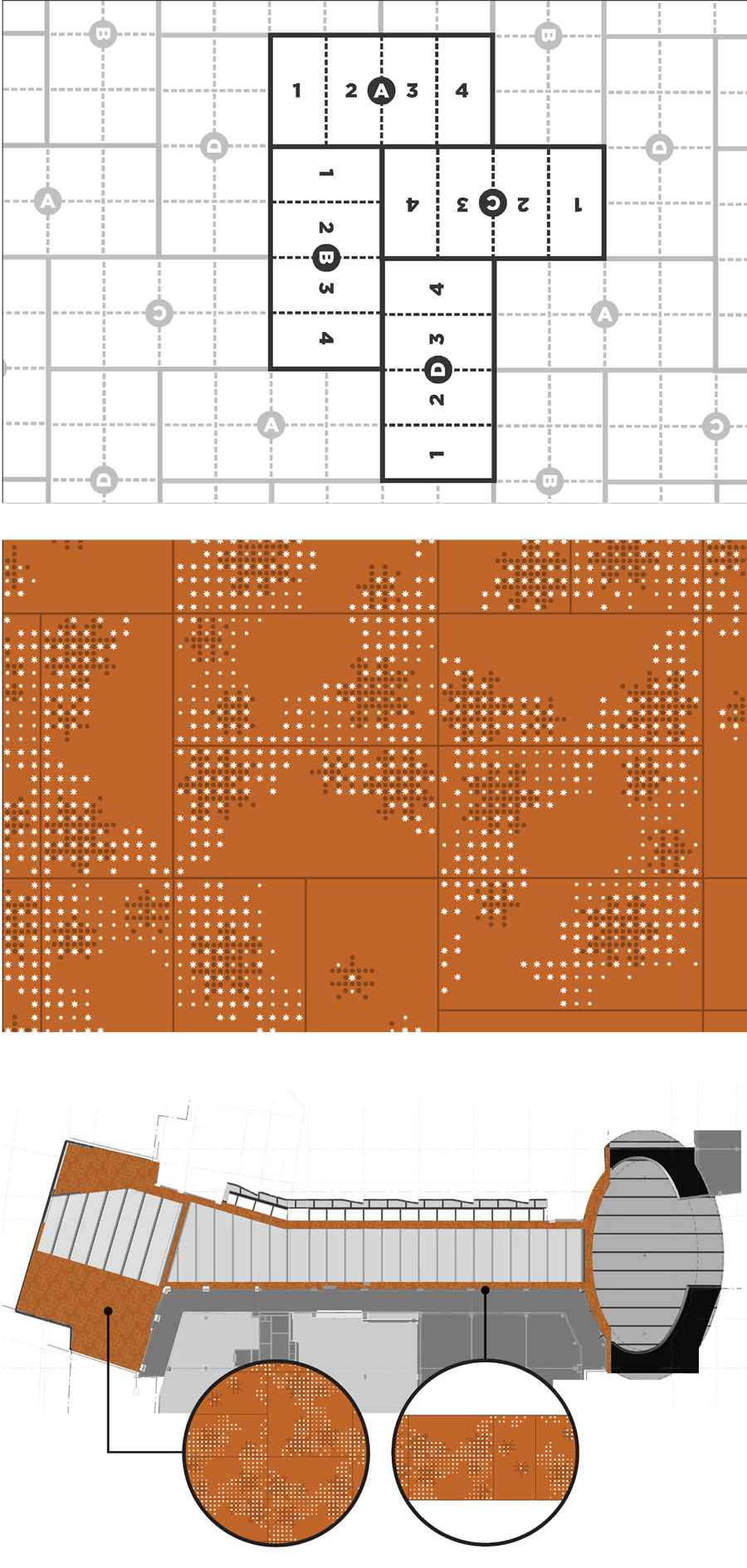
The project team initially asked for a pattern that “didn’t look like a pattern” — a visually rich surface that avoided feeling overly repetitive. While conceptually appealing, this proved difficult to achieve in practice.
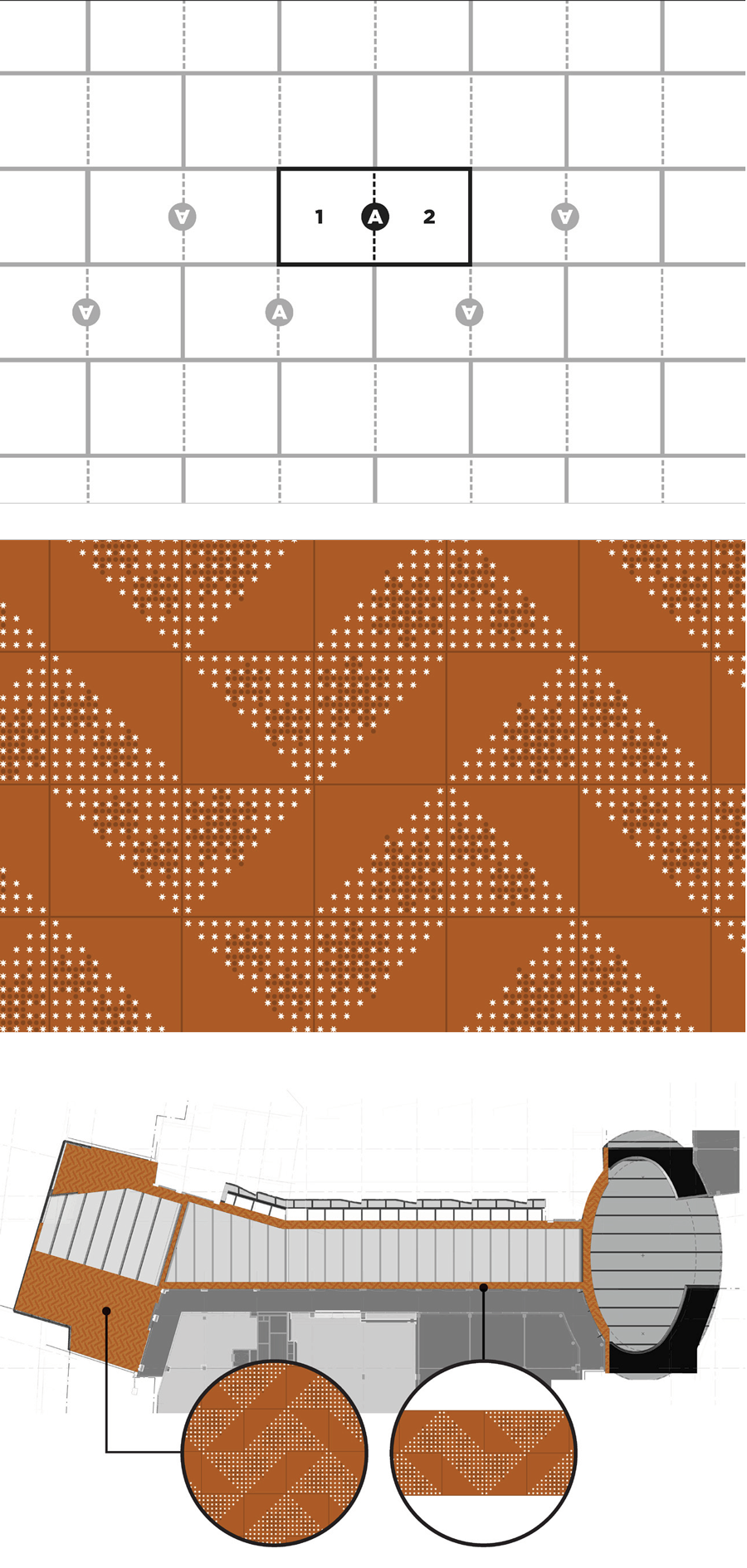
Early explorations attempted to create an irregular, non-repeating composition. However, the more complex the design became in order to disguise the pattern, the more complicated it became for fabrication and installation. The panels would have required excessive flipping, stepping and variation during installation, making the system inefficient to manufacture and construct at scale.
Ultimately, the concept was simplified in order to balance visual interest with practical production constraints.
The Approach
The final design drew inspiration from Docklands’ maritime history as a hub for trade and navigation. Stars — historically used in marine navigation — became the conceptual starting point for the ceiling pattern.
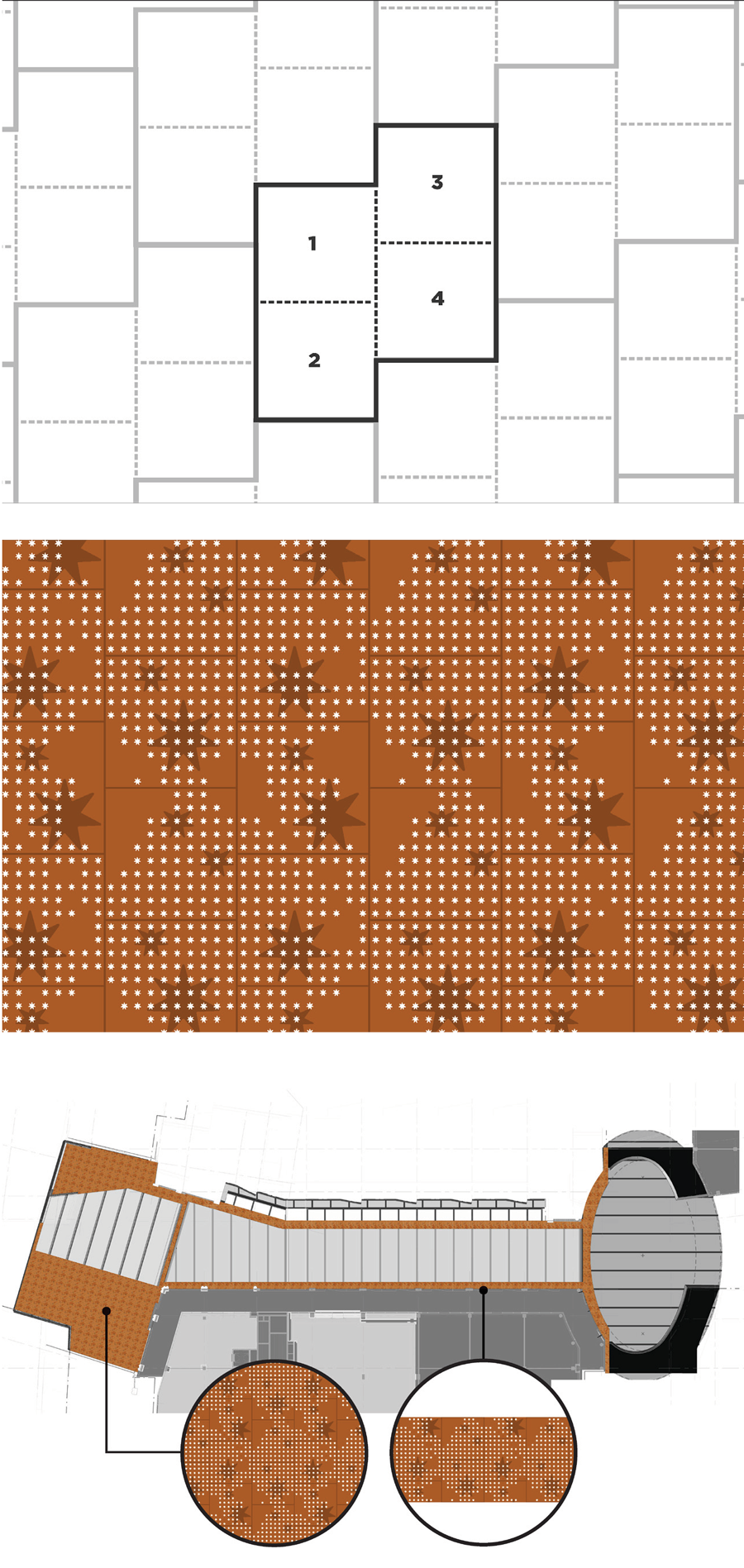
Originally, the design incorporated star-shaped perforations to directly reference this idea. However, during discussions with the manufacturer it became clear that the sharp points would weaken the copper sheeting and compromise its structural integrity. The solution was to reinterpret the concept using circular perforations arranged in a constellation-like composition.
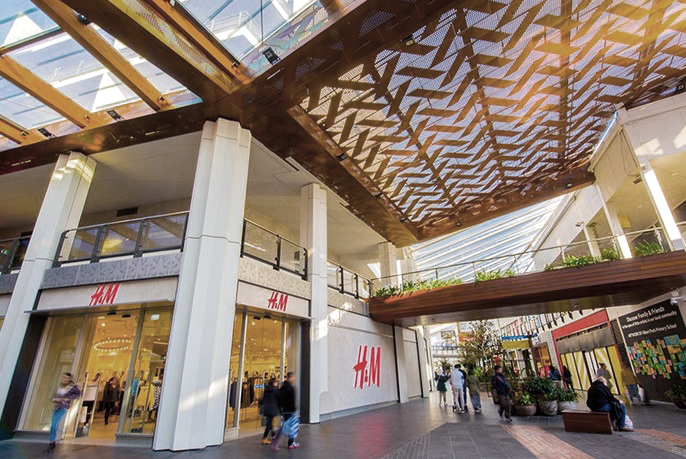
This approach retained the celestial reference while ensuring the panels could be fabricated safely and efficiently. The perforations allow natural light to filter through the ceiling, casting shifting patterns onto the laneway below throughout the day.
My Role


Outcome + Reflection
The final pattern was successfully fabricated and installed across the laneway ceiling, creating a dramatic architectural feature within the precinct. The design became such a defining element of the space that the laneway itself was later named Star Crescent in reference to the ceiling.
This project remains one of the most physically impactful pieces of design work I’ve produced. The scale of the installation — spanning an entire laneway — transformed a simple pattern into an immersive spatial experience.
Interestingly, I only discovered the finished result by chance after leaving NH Architecture, when I visited The District and looked up to see the ceiling fully realised.
Copper Ceiling Pattern Design, The District, Docklands
NH Architecture · 2017
Role: Graphic Design
As part of the redevelopment of The District Docklands, NH Architecture sought a distinctive ceiling feature for one of the precinct’s laneways. I was engaged to design a perforated pattern that would be applied across an expansive copper ceiling, creating a striking architectural detail within the retail and entertainment precinct.
The Challenge
The project team initially asked for a pattern that “didn’t look like a pattern” — a visually rich surface that avoided feeling overly repetitive. While conceptually appealing, this proved difficult to achieve in practice.
Early explorations attempted to create an irregular, non-repeating composition. However, the more complex the design became in order to disguise the pattern, the more complicated it became for fabrication and installation. The panels would have required excessive flipping, stepping and variation during installation, making the system inefficient to manufacture and construct at scale.
Ultimately, the concept was simplified in order to balance visual interest with practical production constraints.

The Approach
The final design drew inspiration from Docklands’ maritime history as a hub for trade and navigation. Stars — historically used in marine navigation — became the conceptual starting point for the ceiling pattern.
Originally, the design incorporated star-shaped perforations to directly reference this idea. However, during discussions with the manufacturer it became clear that the sharp points would weaken the copper sheeting and compromise its structural integrity. The solution was to reinterpret the concept using circular perforations arranged in a constellation-like composition.
This approach retained the celestial reference while ensuring the panels could be fabricated safely and efficiently. The perforations allow natural light to filter through the ceiling, casting shifting patterns onto the laneway below throughout the day.


My Role
Outcome + Reflection
The final pattern was successfully fabricated and installed across the laneway ceiling, creating a dramatic architectural feature within the precinct. The design became such a defining element of the space that the laneway itself was later named Star Crescent in reference to the ceiling.
This project remains one of the most physically impactful pieces of design work I’ve produced. The scale of the installation — spanning an entire laneway — transformed a simple pattern into an immersive spatial experience.
Interestingly, I only discovered the finished result by chance after leaving NH Architecture, when I visited The District and looked up to see the ceiling fully realised.